
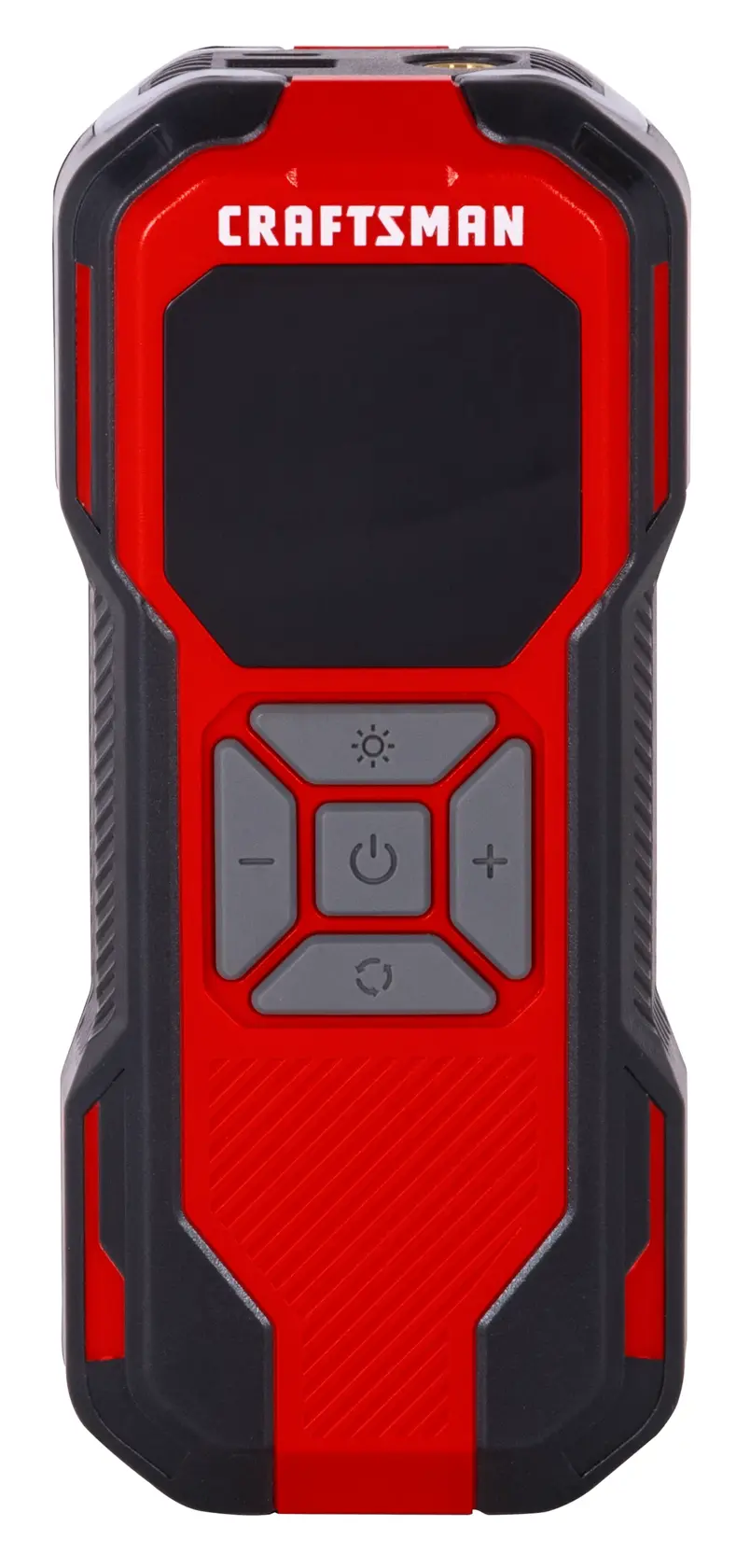
Your needs, this model
Does it fit your priorities?
Can the CMXPTXA1201 run from an internal battery while a car is parked away from an accessory outlet?
The exact-model manual copy describes an integrated rechargeable battery, and the official product page says the inflator is cordless with two power sources. The manual copy says to fully charge it before use and says it cannot be operated while charging. No runtime or number-of-tires-per-charge result is documented in the reviewed sources, so suitability for a particular workload remains open.
Explore this need in the finder →What must be checked before using the CMXPTXA1201 from a vehicle socket?
The manual copy identifies a separate 12V DC vehicle connector, instructs the user to extend the cord fully and states that the socket must be rated for at least 10A. The official product page does not state this rating; because the instruction was obtained from a third-party-hosted copy rather than an official page-linked manual, confirm it with CRAFTSMAN if it determines compatibility. No outlet-current requirement should be borrowed from another model.
Explore this need in the finder →Does the CMXPTXA1201 include a specifically named Presta, Schrader or ball connection?
The official product page lists three valve adapters but does not name them, and the manual copy does not identify their exact adapter names or the tire-chuck subtype. It mentions that a standard car-tire valve needs no adapter but does not call it Schrader. Verify the actual valve and included pieces before purchase; this record does not assign a named adapter capability.
Explore this need in the finder →The CRAFTSMAN CMXPTXA1201 is a compact 12V-labelled inflator with a rechargeable battery inside and a second, vehicle-powered route. That makes it materially different from the CMXPTXA1202: the 1201 can be used away from a vehicle after charging, while the 1202 is documented as a corded unit that plugs into a 12V accessory socket. The 1201’s exact US product page describes two power sources, a digital display, preset PSI selection and car-tire and sports-ball use. More detailed limits come from a copy of the exact-model manual hosted by a third party; CRAFTSMAN’s reviewed product page did not link that manual, and the manual cover itself uses the slightly different prefix “GMXPTXA1201” even though its specifications identify CMXPTXA1201. Treat those manual details as useful but lower-provenance evidence and confirm them with the manufacturer if a particular capability is essential.
Two power routes, with a consequential socket condition
The manufacturer’s page confirms two selectable power sources but does not identify both. The manual copy describes an integrated rechargeable battery and a separate 12V DC vehicle connector. It instructs the user to fully extend that cord and says the vehicle accessory socket must be rated for at least 10 amps. That is a concrete installation check for the corded route, not a general claim that every vehicle outlet will work. The sources do not document battery clamps, a trailer’s 7-way auxiliary plug or 120V wall operation.
Charging and inflating are not simultaneous options according to the manual: it says the inflator cannot be used while charging. Charge it ahead of time if relying on the internal battery, and do not treat the USB charging cord as an in-use power lead. The product page lists a charging cord, bag, air hose and three valve adapters, but does not name those adapters. The mirror’s diagrams depict a short air hose and both a USB-C charging cord and 10-foot cigarette-lighter lead; check the exact package before assuming all parts in an online offer are present.
Preset stopping is a documented control, not permission to walk away
The product page says the digital gauge displays current pressure and lets the user preset a desired PSI. The manual copy describes the pump stopping when the selected target is reached, and says the current connected pressure appears on the display. Its safety text separately says not to leave the inflator running unattended. Those points belong together: automatic stop can reduce the need to watch the display continuously, but it does not make unattended use acceptable or establish gauge accuracy. The manual says to use a tire gauge before and during tire inflation and to use the pressure specified by the vehicle manual or tire maker.
There is a small but meaningful range conflict. CRAFTSMAN’s page says a desired pressure can be set from 1 to 150 PSI and lists a 150-PSI maximum. The manual copy’s troubleshooting section says manual mode adjusts from 3 to 150 PSI. The manual’s reference table includes example ranges for cars, motorcycles, bicycles and several balls, but labels those values reference-only and directs the reader to the item’s own instructions. Do not rely on the low-end discrepancy to set a target: use the equipment maker’s recommendation, and ask CRAFTSMAN to clarify a required setting below 3 PSI.
Broad intended uses, but no validated tire-size or fill-time promise
The official page identifies car tires and sports balls. The exact-model manual copy also covers motorcycle and bicycle tires, and shows reference values by item category. Those examples make the 1201 more versatile on paper than a car-only top-off unit, but they do not establish compatibility with every tire, valve or sports item. The manual notes that a standard car-tire valve needs no adapter, but does not name that valve family; its three supplied adapters are not identified by name in the official package list. So the evidence does not justify promising a named Schrader adapter, Presta adapter or ball needle, or assigning a press-on or twist-on chuck type. Confirm the actual valve and exact offer contents first.
Nor is there an exact tire-size fill test in the manufacturer product page or manual text reviewed here. The manual mirror includes third-party retailer-style specifications such as an airflow figure, but that is not treated as verified manufacturer performance evidence. A maximum pressure rating is a ceiling, not an indication of how quickly a particular car tire can be filled. The reference table’s car range of 32–40.5 PSI is not an instruction for your vehicle; choose the vehicle placard or owner manual’s cold pressure. For bicycle and ball settings, use the item maker’s value rather than treating the manual’s reference range as universal.
Operating and purchase checks
The manual says the inflator may become hot and should cool for 30 minutes before storage. That is a storage caution, not a published duty-cycle formula, and the reviewed material does not state a repeated tire workload, battery runtime, number of tires per charge or gauge tolerance. It also does not say that a 150-PSI headline rating guarantees a suitable pressure range for every intended item. A rider expecting repeated high-pressure road-bike use should verify the exact pressure limits and attachment identity; a driver depending on the 12V route should check that the socket is rated for at least 10A and that the cord reaches safely.
In a source-based comparison, the CMXPTXA1201’s appeal is the combination of a built-in battery, a backup vehicle lead, current-pressure display and target stop. The tradeoff is that detailed operating instructions are available here only through a third-party manual mirror with a title/cover model-prefix discrepancy, while the official product page is sparse about the power routes, adapter identities and workload. By contrast, the CMXPTXA1202 has a clearly itemized 10-foot 12V cord, Presta adapter and ball needle, but no documented internal battery or target-stop behavior. Neither page provides a standardized passenger-tire fill test that would support a speed ranking.
Bottom line
Consider the CMXPTXA1201 if a charged internal battery and a separate 12V socket fallback match the way you expect to work, and its modest published detail is acceptable. It has a documented preset display and target stop in the manual copy, but the same copy says to remain present, not to operate while charging, and to use a socket rated at least 10A for vehicle power. Its adapter identities, chuck style, battery runtime, tire-size performance and gauge tolerance remain unresolved. Confirm the exact model, manual revision and package before purchase; do not substitute a generic “12V” label for a check of the actual power and valve setup.
Sources: CRAFTSMAN CMXPTXA1201 product page; third-party-hosted copy of the CMXPTXA1201 instruction manual (manual cover reads GMXPTXA1201; official page did not link this copy).
Key specifications
Key details at a glance
| Product-page maximum-pressure claim | 150 PSI |
|---|---|
| Battery energy | 22.2 Wh |
| Automatic stop at target | Yes |
| Operating power arrangement | Multiple alternative power sources |
| Minimum documented vehicle-port rating | 10 A |
Use the exact model’s instructions for operating limits, supplied equipment and version differences.
Sources for this review
Sources for this assessment

Match the inflator to your power and tire
Use the finder to check whether a reviewed model's documented power source, mode and accessories fit your requirements. It cannot prove an unlisted fit or predict actual fill time.