
Your needs, this model
Does it fit your priorities?
Does the PCL001K1 package include a battery and charger?
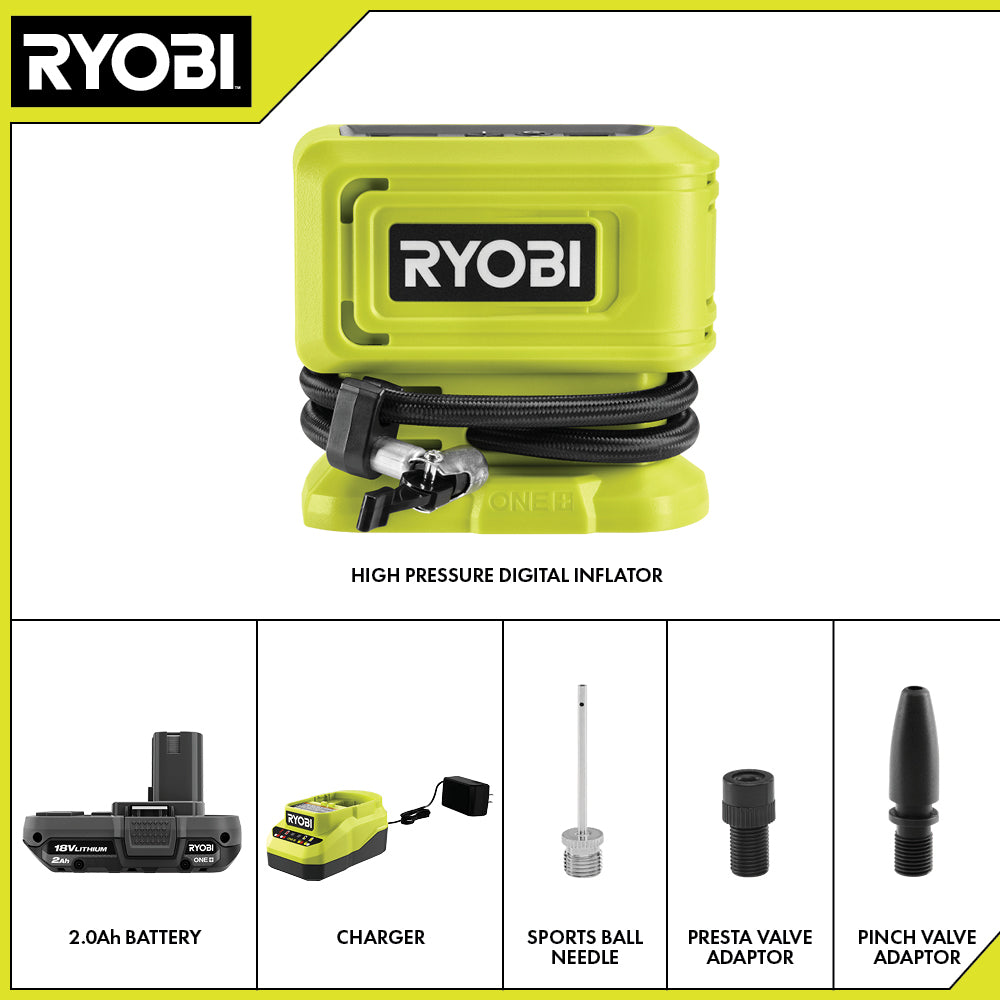
The exact RYOBI PCL001K1 page lists one 2Ah PBP006 18V ONE+ lithium-ion battery and a PCG002 charger with the PCL001 pump. They are a removable tool-platform pack and charger, not an internal battery. Confirm the exact K1 suffix and package contents in the offer.
Explore this need in the finder →Can I rely on the PCL001K1 to stop automatically at the set pressure?
RYOBI's exact product page advertises a selected-pressure stop, but the PCL001 operator manual tells the user to press start/stop at the target and does not document an automatic pump stop. This is an unresolved page/manual conflict, not a verified unattended-use feature. The manual separately says never to leave the inflator unattended with its nozzle attached.
Explore this need in the finder →Can the PCL001K1 inflate a bicycle tire with a Presta valve?
The exact kit page lists a Presta adapter, and the PCL001 manual explains threading it onto a loosened Presta stem before locking the main air chuck onto the adapter. The manual gives no bicycle pressure range or gauge tolerance, so use the bike maker's target and verify it with an appropriate gauge.
Explore this need in the finder →What does the sports-ball attachment change?
The package lists a sports-ball needle, but the manual says most sports-ball pressures are too low for accurate readings on the pump gauge and calls for short bursts and an accurate check at 10 PSI or below. The needle establishes a connection, not a ball-specific pressure rating or a verified automatic stop.
Explore this need in the finder →The PCL001K1 is RYOBI’s 18V ONE+ High Pressure Digital Inflator Kit: a PCL001 pump body packaged with one 2Ah PBP006 battery and a PCG002 charger. It is a different buying proposition from the PCL001B tool-only listing, but the manufacturer identifies the same PCL001 inflator in both packages. The kit makes sense to evaluate as a portable tire-and-small-item pump for someone who wants the 18V battery and charger in the box, not as an integrated-battery inflator or a high-volume air-mattress pump.
What the high-pressure label does—and does not—mean
RYOBI’s product information lists car, motorcycle and bicycle tires, plus sports balls, and the PCL001 manual gives 160 PSI as the unit’s maximum. That is a ceiling, not a recommended pressure for any tire. Use the cold-pressure target specified by the vehicle or tire maker and do not take the pump’s maximum as a usable target. The manual also warns that its digital gauge is not calibrated for exact values and calls for checking a vehicle tire with a reliable measuring device before driving. A digital screen is useful for seeing the pump’s displayed pressure; it is not evidence of an accuracy tolerance.
This is a single high-pressure arrangement, not a dual-function compressor. The product page does not give an independently verified fill-time, a tire-size envelope, battery top-offs per charge, or a current-draw figure. A high maximum-pressure headline cannot answer whether the kit suits a large, low tire or a long series of inflation jobs. Treat it as a small portable inflator with documented uses, then check the manual’s cycle limit before planning a task.
The kit changes power and package—not the pump’s role
The exact PCL001K1 product page lists the PCL001 inflator, a 2Ah PBP006 lithium-ion battery, a PCG002 charger, a sports-ball needle, a Presta valve adapter, a pinch-valve adapter and the operator’s manual. The battery is a removable RYOBI 18V ONE+ pack, not a battery built inside the inflator. That distinction matters: a shopper asking for a self-contained rechargeable unit is asking for something different, and the PCL001K1 page does not establish a 12V vehicle-socket or direct-clamp operating route. The charge time and the number of tires a pack can inflate are not stated in the reviewed material.
For the included Presta adapter, the manual describes threading it onto the loosened bicycle valve and then locking the pump’s air chuck onto the adapter. It also identifies the included sports needle and a tapered pinch-valve attachment. These are supplied attachments, but they are not a second high-volume pump mode. Confirm the exact PCL001K1 code and box contents rather than assuming that another PCL001 bundle or seller package is identical.
Pressure stopping needs a careful source check
RYOBI’s current product page advertises automatic shutoff at the desired PSI. The captured PCL001 operator manual, however, instructs the user to set pressure in 5 PSI increments, start inflation, and press the start/stop control when the desired reading is reached. Its manual-inflation instructions also describe holding that control until the target is reached. The same manual says the display itself automatically switches off after five minutes without use; that is not the same thing as a pump stopping at the target. Because the page feature claim and manual procedure do not align, this review does not treat target-based automatic stopping as independently established. Keep the task attended, follow the exact instructions supplied with the tool and verify pressure with a reliable gauge.
Short hose and a short duty window shape the job
The manual specifies a 24-inch high-pressure hose and a five-minutes-on/five-minutes-off duty cycle. It also says to allow five minutes of cooling after each five minutes of continuous use, warns against blocking the hose, and says not to leave an inflator unattended with its nozzle attached. Those limits are more decision-useful than an unqualified “up to 160 PSI” headline. They make it a poor fit for a continuous or commercial workflow, and they call for a pause if a larger task runs beyond a brief session.
The manual further advises short bursts for items at 10 PSI or below, with a check after each burst using feel or a calibrated measuring device. It specifically notes that most sports-ball pressures are too low for an accurate reading on the tool gauge. The supplied needle makes a ball connection possible, but it does not turn the display into a low-pressure ball gauge or remove the need to monitor the ball maker’s target.
Who should compare it with the tool-only PCL001B?
The PCL001K1 is the more complete starting package when a buyer needs the stated 2Ah battery and PCG002 charger; the PCL001B listing includes the same PCL001 pump and named adapters but says the battery and charger are sold separately. The relevant difference is package completeness, not a second pump design or a longer published hose. A buyer who already owns a compatible 18V ONE+ pack may prefer to compare the tool-only package, while someone without one should account for the battery and charger that the bare tool does not supply.
For either configuration, the biggest open points are practical rather than cosmetic: no gauge tolerance, current draw, charge time, battery fill count, tire-size limit or verified target-stop procedure is established by the material reviewed here. Check the exact model and seller package, use the required cooling interval, and confirm pressure independently. This is an assessment of RYOBI’s product information and manual, not a hands-on test or ownership report.
Key specifications
Key details at a glance
| Product-page maximum-pressure claim | 160 PSI |
|---|---|
| Documented accessories | PCL001 18V ONE+ high-pressure inflator / one PBP006 18V ONE+ 2Ah lithium-ion battery / one PCG002 charger / sports-ball needle / Presta valve adapter / pinch-valve adapter / operator's manual |
| Operating power arrangement | Removable 18v one plus battery |
| Tire-chuck connection style | Press-on tire chuck |
| Pressure gauge scale | 160 PSI |
Use the exact model’s instructions for operating limits, supplied equipment and version differences.
Sources for this review
Sources for this assessment

Match the inflator to your power and tire
Use the finder to check whether a reviewed model's documented power source, mode and accessories fit your requirements. It cannot prove an unlisted fit or predict actual fill time.