
Your needs, this model
Does it fit your priorities?
Can I plug the 300P into a cigarette-lighter outlet?
No accessory-socket setup is documented for part 30033. VIAIR specifies 30A maximum draw, battery clamps and a 40A inline fuse; the manual says the vehicle engine should run. Check the battery connection/current instructions rather than assuming a 12V dash outlet is suitable.
Explore this need in the finder →Does the 300P stop at a tire target automatically?
No preset stop is documented. Its manual describes switching it off at the desired pressure and notes that airflow affects the gauge reading. Remain present, use the vehicle placard pressure and pause to check.
Explore this need in the finder →Can the 300P connect to a Presta bicycle valve?
VIAIR lists a Presta adapter and says it is required for a Presta valve. Confirm it is in the exact 30033 package. The manufacturer tire-size reference is not a bicycle capacity or fill-time promise; use the tire maker’s pressure guidance.
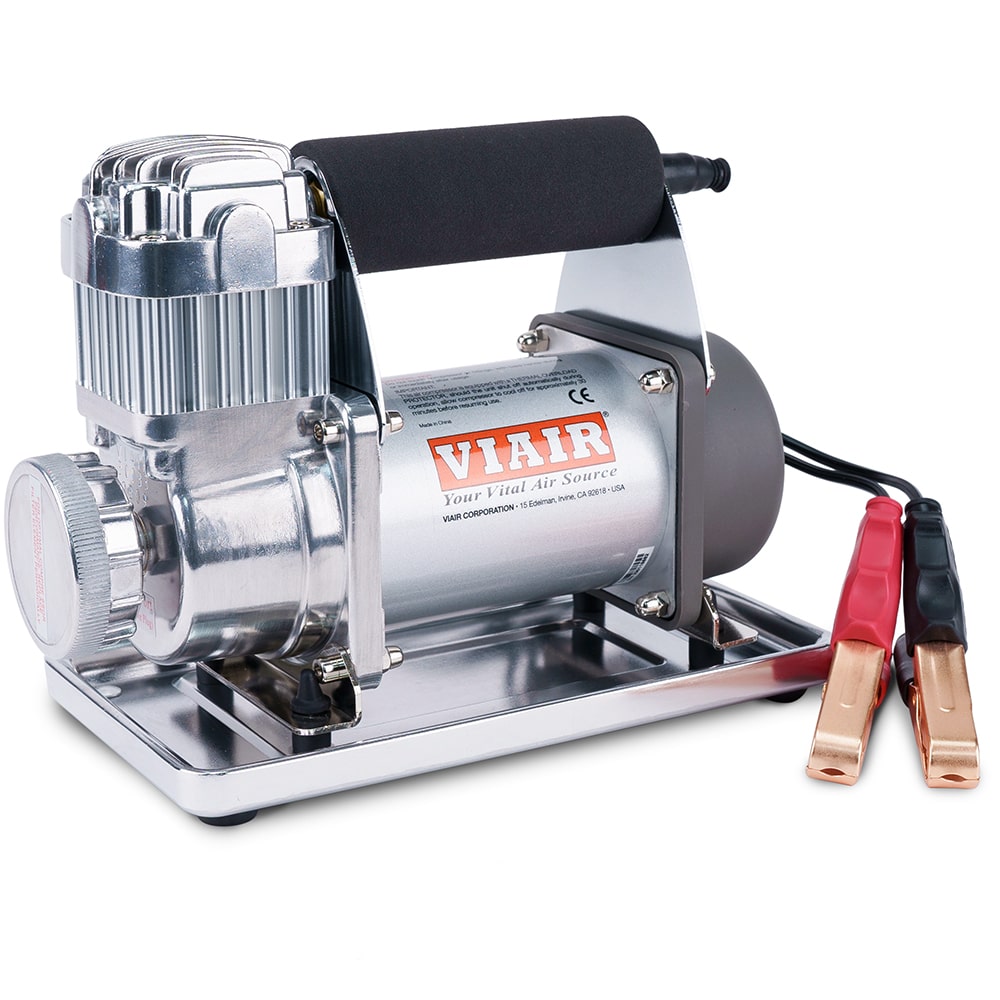
Explore this need in the finder →The VIAIR 300P / part 30033 is a portable, 12-volt compressor for direct battery-clamp operation, with a long coil hose and an inline inflator/deflator tool. Its appeal is not cordless convenience: the unit asks for a substantial vehicle-power connection and manual supervision in exchange for more reach and a larger published tire-size reference than the compact VIAIR 90P. The page and linked manual identify the 30033 configuration; this is a document-based assessment, not a hands-on test.
Start with the electrical setup
VIAIR lists 30 amps maximum draw and a 40-amp inline fuse. The manual specifies 12-volt DC systems, directs users to attach the red and black battery clamps with the compressor switched off, and says the vehicle engine must be running during use. That excludes a routine cigarette-lighter or accessory-socket setup; the page does not document an accessory plug. Check the vehicle and battery connection plan before buying, and do not substitute a larger fuse for the provided protection.
The published power lead is eight feet, while the coil hose is 25 feet. This allocation favors hose reach once the compressor is positioned beside the vehicle: VIAIR’s instructions say to move the unit to the same side as the tire being aired rather than tugging it by the cable or hose. Keep the compressor upright, uncoil the power lead fully, work in a ventilated dry location and leave room to handle the hot compressor and fittings after use. The manual warns against water exposure and running the unit in soft sand, and says it should never be left unattended.
Its headline ratings are not a promise of fill time
VIAIR publishes 2.30 CFM at zero PSI, a 150-PSI maximum working pressure, 33% duty at 100 PSI and continuous use of 30 minutes at 30 PSI at 72°F. Those are separate operating statements, not a single all-conditions performance rating. The 100-PSI inline gauge is also not a target-setting system. The manual says to switch the compressor off when the desired pressure is reached and warns that the gauge reading changes while air is moving; pause inflation for a meaningful check. Use the pressure recommended for the vehicle, not the compressor’s maximum pressure.
The 300P page lists tires up to 33 inches. Treat that as VIAIR’s application reference rather than proof that every 33-inch tire, starting pressure or multi-tire workload is suitable. No same-test fill time for a named tire and pressure change is provided in the reviewed sources. If the planned task involves repeated full-flat recovery or a specific large tire, ask VIAIR to confirm the exact workload against the current manual and duty limit rather than extrapolating from zero-pressure airflow.
The hose and package broaden the work
The product page describes a 5-in-1 coil hose with a tire chuck, pressure gauge and deflation controls, plus a three-piece inflation-tip kit and a separate Presta adapter. VIAIR explicitly notes that a Presta bicycle valve requires that adapter. This creates a documented bicycle-adapter route, but it does not establish a bicycle-tire size capacity or a fill-rate result. Check the exact seller package for the adapter and hose before ordering; an accessory listed on a product page should not be assumed to appear in every used or incomplete offer.
One practical limitation is hose care. VIAIR says the included air hose can become brittle after prolonged UV or sunlight exposure and should be stored when not in use. It warns not to let the hose contact the hot compressor head and does not recommend using the hose in sub-zero or freezing conditions. These cautions make storage and route planning part of the ownership calculation, especially if the kit will live in an exposed vehicle compartment.
300P or 300P SXS?
The SXS version is a distinct 30032 package, not merely a name for the 30033. VIAIR describes it as an upgraded version with a two-pin SAE connection, battery-clamp connector and straps/hardware for UTV mounting. Its inline gauge is marked to 60 PSI, whereas the standard 300P page and manual list a 100-PSI inline gauge. Both models share the published 30-amp draw, 150-PSI working limit, 33% duty claim at 100 PSI and 25-foot hose. Choose the standard 300P when the simple clamp lead and its stated gauge scale suit the use; consider SXS when its permanent SAE lead and mounting package fit the vehicle plan. Neither model becomes an accessory-socket pump.
Fit boundaries to confirm
On paper, the standard 300P suits a buyer who needs direct battery power, a long hose, manual inflation/deflation control and a documented Presta adapter in the selected kit. It is a poor choice if the essential requirement is cordless use, auto-stop, a 12V accessory plug or unattended operation. Confirm the package is actually 300P / 30033, check the current manual and included attachments, ensure the vehicle’s circuit and clamps are appropriate, and follow its recommended cold tire pressure. VIAIR’s hose, fuse and duty-cycle warnings are more useful for this decision than a broad speed claim.
Sources checked 2026-10-28: VIAIR’s 300P / 30033 product page, its linked 30033 manual, the portable tire-inflator table, and the compressor comparison chart.
Key specifications
Key details at a glance
| Automatic stop at target | No |
|---|---|
| Documented accessories | dual battery clamps / 40A inline fuse holder / 8-foot lead / 25-foot 5-in-1 inflator/deflator coil hose with 100-PSI inline gauge / aluminum sand tray with isolators / dual-compartment carry bag / three-piece tip kit / Presta adapter |
| Operating power arrangement | Vehicle battery clamps |
| Maximum working pressure | 150 PSI |
| Maximum current draw | 30 A |
| Inline fuse rating | 40 A |
| Tire-chuck connection style | Press-on tire chuck |
| Published duty-cycle condition | 33% at 100 PSI; manual also states 30 minutes at 30 PSI at 72F |
| Manufacturer-listed tire-size reference | up to 33 inches (manufacturer application reference only) |
| Power cord length | 8 ft |
| Air hose length | 25 ft |
| Pressure gauge scale | 100 PSI |
Use the exact model’s instructions for operating limits, supplied equipment and version differences.
Sources for this review
Sources for this assessment
Match the inflator to your power and tire
Use the finder to check whether a reviewed model's documented power source, mode and accessories fit your requirements. It cannot prove an unlisted fit or predict actual fill time.