
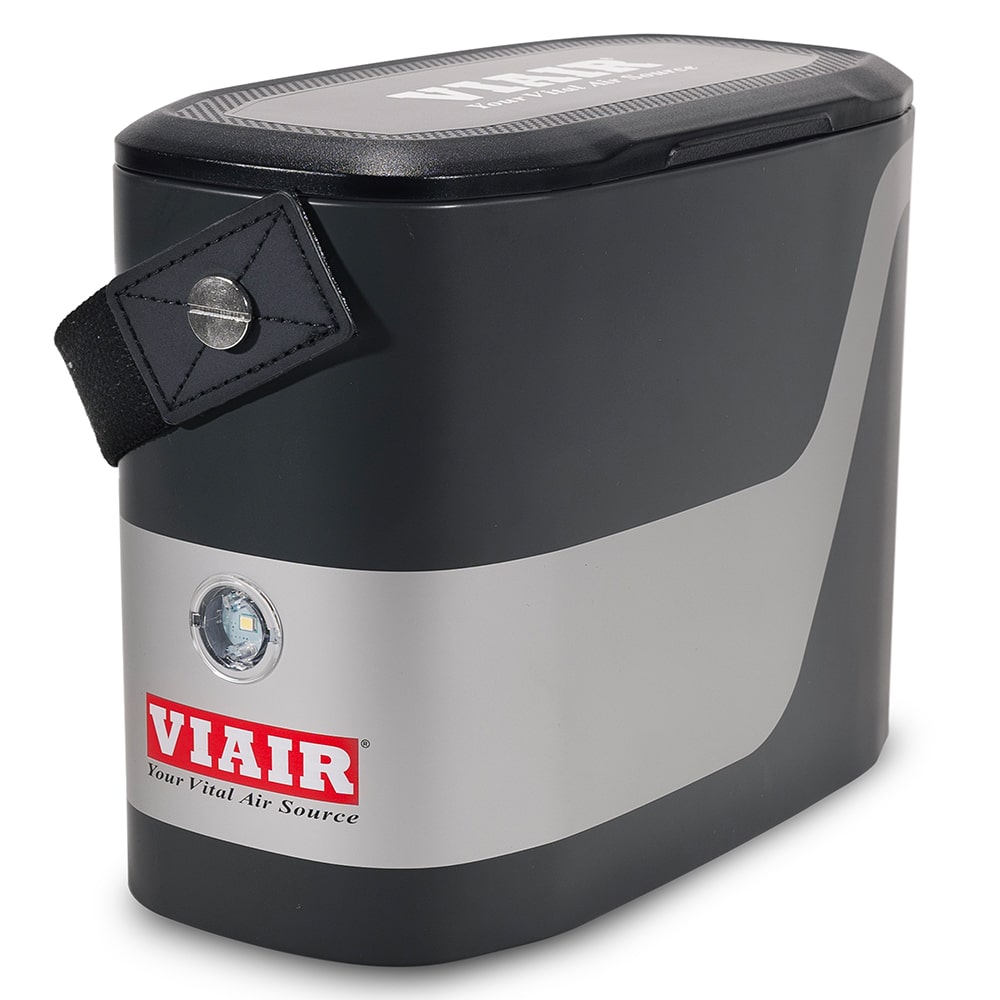
Your needs, this model
Does it fit your priorities?
Can I set a car-tire pressure and let the EVC75P stop at that target?
The current product page and manual describe a digital pressure gauge with a selected target and automatic shutoff for tires. Set the correct cold pressure from the vehicle placard, stay with the compressor and verify the result. The manual says not to rely on auto-stop for sports balls, toys or other non-tire items. The outlet must support 10A/120W and the engine must run.
Explore this need in the finder →Will the EVC75P work from any 12-volt accessory socket?
No. VIAIR's manual requires a power port rated for 10 amps or 120 watts and warns that some vehicle outlets have a lower rating. It also says the engine must be running during use. Check the vehicle manual before choosing this model, and keep the power cord fully extended while operating the compressor.
Explore this need in the finder →Does the EVC75P include a Presta adapter for a bicycle valve?
VIAIR lists an included Presta valve adapter and the manual's operating steps tell the user to attach it to a Presta valve. The page/manual do not state a bicycle tire-size capacity or fill-time figure. Confirm the adapter is in the seller's package and use the pressure specified for that bicycle and tire.
Explore this need in the finder →The VIAIR EVC75P is a digital, preset-stop version of the compact 75P role, not the same configuration as the analog-gauge 75P / part 00075. VIAIR identifies this model by the separate EVC75P part number on its current product page and in the matching manual. Its trade is straightforward: an accessory-socket cord replaces a rechargeable battery, and a preset gauge replaces the analog model’s manual pressure checking. This is a source-based assessment, not a hands-on test; published figures describe VIAIR’s stated conditions rather than independent performance results.
Check the outlet before the package
The EVC75P is a 12-volt DC compressor that VIAIR says needs a vehicle power port supporting at least 10 amps or 120 watts. The manual warns that some factory accessory outlets are rated below that level, so check the vehicle manual before relying on a dashboard socket. Its instructions also say the vehicle engine must be running during operation. This is not a cordless pump, and a 12-volt plug does not make it appropriate for every car’s accessory port.
VIAIR lists a 10-foot power cord and a two-foot air hose. The power lead gives useful reach around a vehicle, but the short hose means the unit still needs to sit relatively near the tire. Plan where to place the metal case before connecting it, keep the cord uncoiled and the machine in a dry, well-ventilated spot. The manual says the compressor gets hot during and immediately after use, must not be left running unattended, and should be kept away from heavy moisture, soft sand and dirt. These are practical setup requirements, not cosmetic fine print.
Preset stopping helps with tires, not every inflatable
The product page describes a digital gauge and preset automatic shutoff. The manual’s sequence is to connect the unit to the accessory port, start the engine, connect the tire chuck, select a pressure unit, set the target, and start inflation. It says the compressor stops automatically at the selected target. That is useful for a driver who wants to set a known cold-pressure target, but the pump cannot determine the right pressure for the vehicle. Use the placard or vehicle manual, stay nearby, and verify the finished pressure rather than assuming a preset makes the process unattended.
VIAIR lists the EVC75P for a 205/65R16 maximum tire-size reference and a 100% duty-cycle claim at 50 PSI. Its product page and current manual also say “Max. Working Pressure: 100 PSI,” while the portable-model table’s “Work Pressure” column says 50 PSI. The manual ties the 100% duty-cycle figure to 50 PSI and 72°F; the sources do not explain the different pressure labels. Do not treat a duty-cycle test condition as a pressure ceiling, or the higher 100 PSI claim as a guarantee of suitable operation for a particular tire. If your intended application approaches a boundary, check with VIAIR against the exact manual and model.
Attachments are less certain than the feature list suggests
The reviewed package description includes an integrated metal case, LED work light, digital gauge, carry bag, three-piece inflation-tip kit and Presta valve adapter. The manual says the compressor can inflate tires and sports balls. For non-tire inflatables it specifically warns not to rely on the auto-shutoff: attach the appropriate kit nozzle and stop it manually when the desired firmness is reached. The listed Presta adapter documents a route for a Presta valve, but VIAIR’s reviewed sources do not state a bicycle-tire size or fill-rate capacity for this model.
One identity detail remains unresolved in the manufacturer’s own operating material. The manual’s product-overview diagram calls the supplied tire chuck “Press-On,” then its operating instructions tell the reader to attach a “Twist-On” air chuck. Because those are distinct connection styles, this assessment does not classify the EVC75P as either one, and the finder will not claim a required chuck-style match. Inspect the exact unit and ask the seller to confirm the supplied connection if that distinction matters to you.
Where it fits—and where it does not
On paper, the EVC75P is a reasonable candidate for a driver whose vehicle manual confirms a 10-amp, 120-watt 12-volt outlet, who can run the engine, and who wants automatic pressure stopping for routine tire maintenance. Its current manufacturer family article positions the EVC75P for hatchbacks and sedans; that is an intended-use description, not a fit guarantee. The current table’s 205/65R16 listing is the more specific size reference. It does not substantiate larger truck tires, a from-flat recovery, or a promised time for a pressure change.
Compared with the analog 75P / 00075, the EVC75P offers a digital target and automatic stop, but requires a verified outlet and has a shorter two-foot hose in the current specifications. Compared with the battery-powered EVC23P, it avoids charging upkeep but depends on the vehicle’s 12-volt circuit. Before ordering, verify the EVC75P part number rather than relying on “75P” alone; confirm the exact chuck, included tips, Presta adapter and bag; check the outlet rating; and reconcile the pressure labels with the current manual. Those checks matter more than an unqualified claim that the compressor is simply “automatic.”
Key specifications
Key details at a glance
| Automatic stop at target | Yes |
|---|---|
| Documented accessories | integrated metal case / digital pressure gauge / LED work light / three-piece inflation-tip kit / Presta valve adapter / carry bag |
| Operating power arrangement | 12V vehicle accessory port |
| Maximum working pressure | 100 PSI |
| Maximum current draw | 10 A |
| Minimum documented vehicle-port rating | 10 A |
| Inline fuse rating | 10 A |
| Manufacturer pressure-rating conflict | Yes |
| Conflicting maximum-working-pressure claims | The manufacturer table labels 50 PSI as Work Pressure. The product page and manual say Max. Working Pressure 100 PSI, and the manual specifies 100% duty cycle at 50 PSI and 72°F. Documentation does not reconcile the labels; keep the duty condition distinct from a pressure ceiling and verify the exact manual for the intended task. |
| Published duty-cycle condition | 100% at 50 PSI; manual specifies 72°F for the duty-cycle figure |
| Manufacturer-listed tire-size reference | 205/65R16 (manufacturer table reference; not a fit guarantee) |
| Power cord length | 10 ft |
| Air hose length | 2 ft |
Use the exact model’s instructions for operating limits, supplied equipment and version differences.
Sources for this review
Sources for this assessment
Match the inflator to your power and tire
Use the finder to check whether a reviewed model's documented power source, mode and accessories fit your requirements. It cannot prove an unlisted fit or predict actual fill time.