
Your needs, this model
Does it fit your priorities?
How is the EVC84P different from the EVC85P?
VIAIR lists SKU EVC84P with a press-on tire chuck and SKU EVC85P with a twist-on chuck. The EVC84P is still a Digital 85P-family compressor with the documented 12V socket power and preset tire stop. Confirm the exact SKU and connection in the offer; it is not the older analog 00084.
Explore this need in the finder →Does the EVC84P require a high-capacity 12V outlet?
Yes. The EVC84P manual lists up to 15 amps / 180 watts, requires the vehicle engine to run and tells the owner to check the exact socket rating. Do not increase the original vehicle fuse rating to make the compressor fit an undersized circuit.
Explore this need in the finder →Which EVC84P pressure limit should I use?
The source set is inconsistent: the product page and comparison table state 60 PSI, while the dedicated manual and information sheet state 100 PSI. Treat the ceiling as unresolved and do not use the 100-PSI claim above 60 PSI until VIAIR confirms the exact EVC84P rating.
Explore this need in the finder →This assessment uses VIAIR’s configuration-specific EVC84P manual, the manufacturer’s 85P Digital product page and its linked information sheet. It is not based on product ownership or hands-on testing.
A press-on chuck is the defining difference
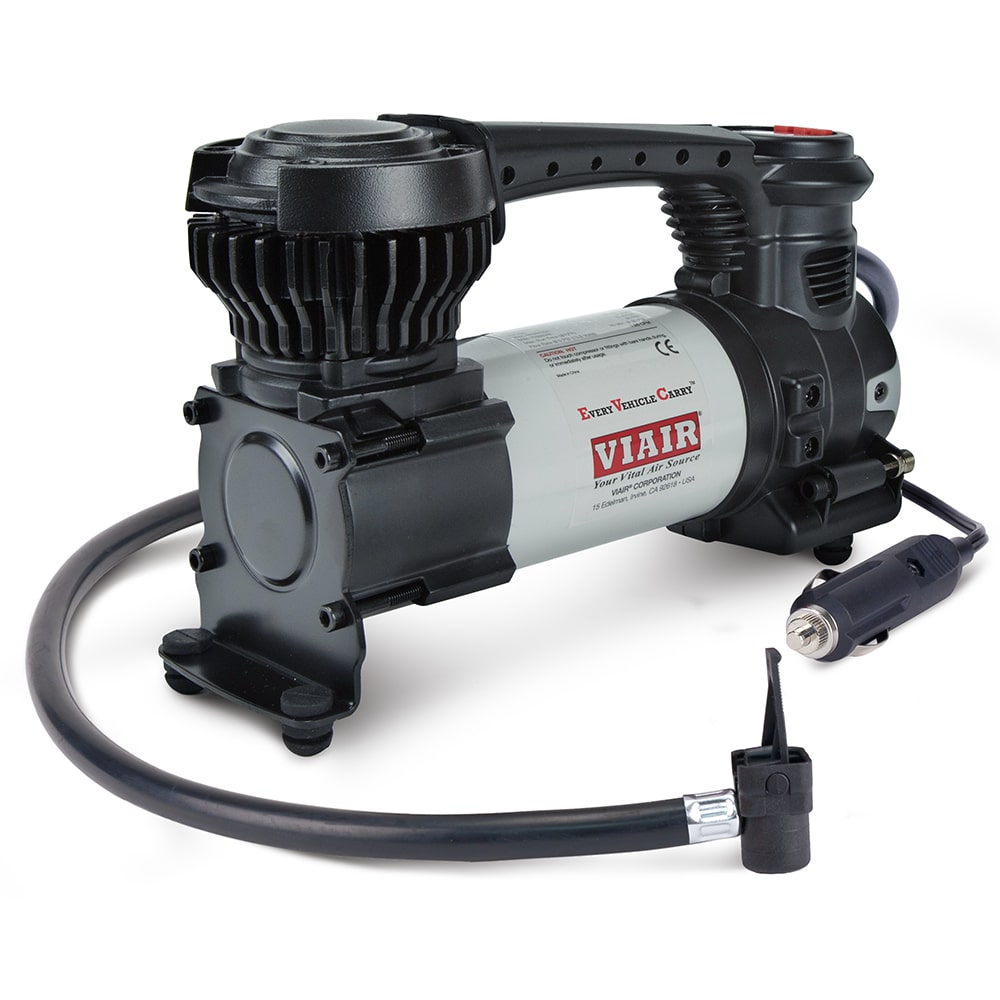
The EVC84P is the press-on-chuck edition of VIAIR’s 85P Digital portable compressor. The shared product page uses the broader “85P Digital” family name, but it identifies SKU EVC84P separately from EVC85P, the twist-on-chuck version. The dedicated EVC84P manual also names the press-on tire chuck. Do not confuse this Digital SKU with the older analog 84P/00084, which is a different product identity. That difference is functional: the EVC84P’s hose connection presses onto the tire valve, whereas EVC85P twists on. VIAIR does not document a head-to-head advantage in seal quality, convenience or service life, so this review does not assign one. Choose the connection style that matches your own preference and experience, then check that the exact offer is actually SKU EVC84P. Product cards and retailer titles may compress the family name enough to hide the configuration.Confirm the vehicle outlet before considering it
This is a 12V accessory-socket compressor, not a rechargeable unit or a battery-clamp model. VIAIR lists maximum draw at 15 amps / 180 watts, a 15-amp fuse in the accessory plug, and a 10-foot power cord. The EVC84P manual requires the vehicle engine to be running and tells the owner to check the vehicle’s socket rating. It explicitly warns not to replace a factory fuse with one rated above the circuit’s original capacity. That makes the vehicle manual an essential pre-purchase check. A socket that accepts the plug may still have a lower current rating than the pump needs. If the outlet is not confirmed for the load, do not assume that a different fuse or an improvised connection is a safe workaround. This model offers no reviewed route for running from an internal battery or from direct battery clamps.Digital target stopping is tire-specific
The EVC84P manual documents a digital gauge, pressure selection, a start control and automatic shutoff when the chosen pressure is reached. It lists gauge accuracy as plus or minus 1 PSI. That is a manufacturer-stated specification, not an independent calibration result. Set the target using the vehicle’s tire placard or owner information; NHTSA distinguishes that recommended cold pressure from the maximum molded on a tire’s sidewall. The manual limits reliance on auto-shutoff to tires. For sports balls and other non-tire inflatables it instructs the user to attach a nozzle and start and stop the compressor manually. It also says the vehicle engine must be on, the power cord must be fully uncoiled to avoid overheating, the unit must not be left unattended, and the compressor becomes hot during and immediately after operation. The feature set therefore helps with a tire-maintenance routine but does not turn this into a universal automatic inflator. There is a material pressure-rating conflict. VIAIR’s current product page and its comparison table state a 60-PSI maximum working pressure for the Digital 85P family, while the EVC84P manual and the linked family information sheet say 100 PSI. Because both claims come from the manufacturer, neither should be silently substituted for the other. Treat the usable upper limit as unconfirmed and do not rely on the 100-PSI figure for a job above 60 PSI unless VIAIR confirms the exact EVC84P specification.Reach, kit and published performance
VIAIR lists a 3-foot air hose, 10-foot power cord, 4.30-pound weight and a 9.1 by 3.1 by 5.6-inch body. The cited sources list a three-piece inflation-tip kit with a Presta adapter and a carry bag. The short air hose affects placement; it is not the same length as the electrical lead. Verify those package items in the seller’s offer rather than assuming every listing contains the manufacturer-page kit. The manual and information sheet list 1.77 CFM at zero pressure and a 20-minute duty condition at 30 PSI; the manual names 72°F for that rating. The information sheet includes example inflation intervals for named tire sizes and pressure ranges, but the document does not provide all conditions needed to predict the time for a different tire or vehicle. These numbers are manufacturer publications, not measurements from this assessment. The manual further warns that the body is moisture- and dust-resistant but not waterproof or dustproof, and says not to operate it in soft sand or dirt.Who should shortlist the EVC84P
Consider it when the vehicle socket is confirmed for a 15-amp load, the engine can run, preset stopping is wanted for tire work, and a press-on chuck is the intended connection. The EVC85P is the closest Digital comparison: most published operating figures are shared, but it has a twist-on chuck. The analog 00084 is not an alternate name for this SKU. Buyers who cannot confirm the circuit rating, want cordless operation, need a longer hose, or depend on a pressure limit above the lower conflicting claim should look elsewhere or obtain written clarification first. No source reviewed here proves fit or fill time for a specific vehicle/tire combination.Key specifications
Key details at a glance
| Automatic stop at target | Yes |
|---|---|
| Documented accessories | carry bag / three-piece inflation-tip set / Presta valve adapter / 12V accessory power plug with 15A fuse / LED work light/power indicator |
| Operating power arrangement | 12V vehicle accessory port |
| Maximum current draw | 15 A |
| Minimum documented vehicle-port rating | 15 A |
| Tire-chuck connection style | Press-on tire chuck |
| Manufacturer pressure-rating conflict | Yes |
| Conflicting maximum-working-pressure claims | Product page and comparison table: 60 PSI; EVC84P manual and information sheet: 100 PSI. Manufacturer sources conflict; confirm exact-SKU limit before use above 60 PSI. |
| Published duty-cycle condition | 20 minutes at 30 PSI at 72°F |
| Power cord length | 10 ft |
| Air hose length | 3 ft |
Use the exact model’s instructions for operating limits, supplied equipment and version differences.
Sources for this review
Sources for this assessment
- Every Vehicle Carry 85P Digital Portable Compressor, EVC84P press-on option
- EVC84P Digital Portable Compressor User Manual, R4-062226
- 85P Digital Portable Compressor Information Sheet, EVC84P and EVC85P
- VIAIR Portable Tire Inflators comparison table
- VIAIR Portable Tire Inflators / Daily Driver collection
- Tire Safety Ratings and Awareness / TireWise
- CPSC Recalls search
Match the inflator to your power and tire
Use the finder to check whether a reviewed model's documented power source, mode and accessories fit your requirements. It cannot prove an unlisted fit or predict actual fill time.